
|
|
 |
What does the name ELVIS PRESLEY mean to you ? |  |
 Home Page |
About Page |
Photo Page |
Catalog Page |
Contact Page |
Custom Page |
Custom2 Page |
Custom3 Page |
Custom4 Page |
Favorite Links Page |
Guest Book Page |
Photo2 Page |
Photo3 Page |
Photo4 Page |
Photo5 Page |
Photo6 Page |
Whats New Page Home Page |
About Page |
Photo Page |
Catalog Page |
Contact Page |
Custom Page |
Custom2 Page |
Custom3 Page |
Custom4 Page |
Favorite Links Page |
Guest Book Page |
Photo2 Page |
Photo3 Page |
Photo4 Page |
Photo5 Page |
Photo6 Page |
Whats New Page |
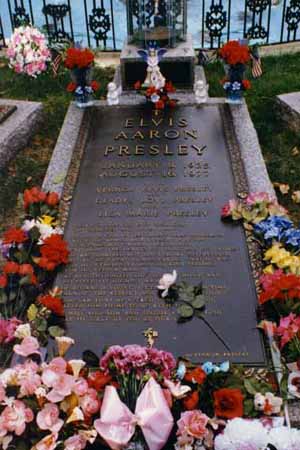
| ELVIS PRESLEY The Hillbilly Cat; Elvis the Pelvis; the King of Rock 'n' Roll; Million-Dollar Actor; the World's Greatest Entertainer. What's in a name? The promotional monikers of Elvis Presley tell his story. They describe the different phases of his career, they reflect its diversity, and they remind fans and detractors of his enormous success and larger-than-life image. That image evolved as Elvis's career progressed. At times, it was deliberately manipulated to appeal to a wider audience. The changes in his image are so apparent that each stage of his career marks a distinctly different Elvis Presley. Elvis burst onto the national scene with a fury 1956, though he had spent a year and a half performing on the country-western circuit as the "Hillbilly Cat." A new recording contract with RCA offered widespread exposure for his music, but it was his appearances on the relatively new medium of television that made him a household name. From the time he stepped in front of the camera on the "Stage Show" and launched into a manic version of "Shake, Rattle and Roll," Elvis Presley became synonymous with rock 'n ' roll, rebel lion; and youth gone wild. Criticism hounded Elvis as his career began to skyrocket. Every aspect of his appearance and performance were attacked -- from his long ducktail haircut to his offbeat taste in clothes to his sensual performing style. "Elvis the Pelvis" was caught up in the flurry of controversy surrounding rock 'n' roll music, and his notorious image a dangerous rebel originated in the media condemnation that plagued him. Through some shrew promotional tactics by Elvis's legendary manager, Colonel Tom Parker, the negative connotation of the singer's image began to change. It didn't hurt that the entertainment press was duly impressed by the revenue that Elvis Presley generated through records, television appearances, and movies. Elvis's signature nickname, "the King of Rock 'n' Roll," supposedly came from the trade newspaper Variety in a 1956 article about his rapid rise through the entertainment industry. As the "Pelvis" gave way to the "King," was viewed as more than just a notorious rock 'n' roller. A two-year stint in the army disrupted Elvis's career, but Colonel Parker turned a potentially disastrous situation into a positive career move by using his client's tour of duty as a way to alter his image. A clean-cut, mature looking Elvis emerged from the army to take Hollywood by storm. Concentrating on an acting career, Elvis began a schedule of starring in two to three musical comedies per year. While these films are often attacked in retrospect for their formulaic stories and mediocre songs, their box-office success made him the highest paid-actor in Hollywood in the mid - 1960's. When his salary reached one million dollars per film, movie fanzines dubbed him the "Million Dollar Actor." While focusing on his acting career, Elvis made no concert appearances, and he limited his recording to soundtrack albums for his films. By the end of the decade, with his movie career waning, Elvis began accepting new challenges. On July 31,1969, he performed in front of a sold out crowd of 2,000 people at the International Hotel in Las Vegas. As his band pounded out "Baby, I Can't Care" Elvis walked onstage. There was no emcee to introduce him. He grabbed the microphone, struck a familiar pose from the past, and snapped his leg back and forth almost imperceptibly. The crowd roared, jumping from their chairs to give him a standing ovation before he had sung one note. The audience whistled, applauded furiously, and pounded in the tables, some people stood on their chairs. Encouraged by the success of this engagement at the International, Elvis returned to live performance. He was usually backed by an orchestra, a rock band, a female trio, and a gospel group, which contrasted sharply to the three-man band that accompanied him during the 1950's. The bejeweled jumpsuits that Elvis wore during this period seem a visual equivalent of the enormous sound he and his musical entourage produced. The large scale and the visual spender lived up to Colonel Parker's favorite billing for Elvis -- the "World's Greatest Entertainer." Looking back, the various stages of his career are as distinctive as the style of music and mode of dress that characterize them. From the "Hillbilly Cat" to the "World's Greatest Entertainer," his career encompassed many changes and touched many entertainment arenas. Perhaps that is the secret of his enormous appeal; He offers something different for everyone. Elvis Presley died in 1977, yet he continues to generate revenue for his estate, while he gains fans and confounds the media. In death, his image has become even more flexible. Fans remain loyal to a romantic idol who, for them, never ages; pop culture historians laud a legend whose contributions to popular music are immeasurable; journalists cite his drug - related decline as an example of the American Dream gone sour. The interpretations may vary widely but all are true. Even in death, Elvis means something different to everyone. |
 |
|
|
|